
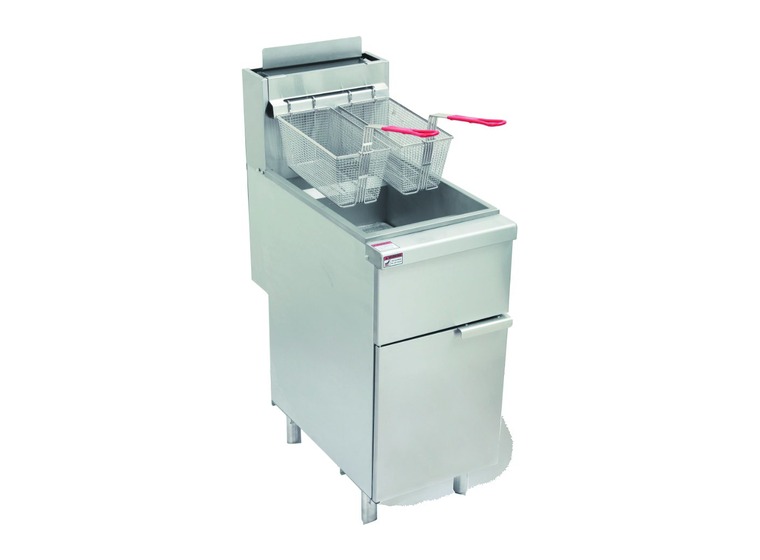
Direct answer: how do you choose a commercial electric fryer?
Choose a commercial electric fryer by matching the machine to your food, portion weight, peak orders per hour, batch size, available counter space and electrical supply. Then compare oil capacity, basket size, tank configuration, rated power, temperature recovery, cleaning access, safety features and model-specific supplier evidence.
Do not select a fryer from oil volume or purchase price alone. A suitable fryer must recover heat after a loaded basket, fit the local circuit, support safe oil handling and produce consistent food during the busiest service period.
Who should use this fryer buying guide?
This guide is for restaurant owners, fried snack shops, cafes, kiosks, quick-service operators, distributors and overseas importers. It is useful whether you need one compact countertop fryer or are comparing models for wholesale, private-label or multi-location projects.
1. Start with the menu and real batch load
List every product that will enter the fryer, including portion weight, frozen or fresh condition, coating and target cooking temperature. Frozen fries, battered chicken, dough products and seafood can place different loads on the oil and may require separate operating procedures.
| Menu factor | Why it matters | What to test |
|---|---|---|
| Food type | Moisture, coating and product thickness affect oil temperature and cooking time. | Cook the actual product, not an empty-water or no-load demonstration. |
| Portion weight | Overloading causes a larger temperature drop and inconsistent browning. | Use the intended sellable portion during the sample test. |
| Peak demand | Average daily volume does not show the pressure of a lunch or event rush. | Run repeated batches during a simulated peak period. |
| Flavor separation | Different foods may transfer flavor or require different temperatures. | Decide whether independent tanks are necessary. |
2. Convert peak demand into fryer output
Estimate the maximum portions required in 15 minutes. Divide this demand into realistic basket loads and include cooking, draining, seasoning and reload time. The key figure is completed portions per hour under repeated use, not the largest amount that physically fits in the basket.
- Record the starting oil temperature before each batch.
- Measure how far the temperature falls after loading food.
- Measure the time required to return to the cooking setpoint.
- Check whether product color and texture remain consistent over several cycles.
- Include staff handling time and food warmer capacity in the service calculation.
3. Choose the oil capacity and basket size together
Oil capacity describes tank volume, but it does not by itself define production output. Basket dimensions, usable food load, heating power and recovery all work together. Ask the manufacturer to define whether a listed capacity refers to total tank volume, recommended operating oil level or another measurement.
A compact six-liter fryer may suit a focused snack counter with moderate batches, while a higher-output restaurant may need a larger tank or multiple independent fryers. Select the smallest configuration that can reliably handle peak demand with an operating reserve. The restaurant fryer capacity guide includes a peak-demand calculation and worked example.
4. Single tank vs double tank commercial fryer
| Configuration | Best for | Main trade-off |
|---|---|---|
| Single tank | Focused menus, small counters, lower initial investment and simple cleaning routines. | One oil zone limits flavor separation and simultaneous temperature settings. |
| Double independent tanks | Two food categories, two cooking temperatures or continuous service with one side available during filtering. | More counter space, electrical load, oil, cleaning time and spare parts. |
| Two separate single fryers | Flexible placement and independent replacement or maintenance. | May use more outlets and counter width than one integrated unit. |
For a new operation, independent tanks are valuable only when the menu and volume justify them. Do not double equipment capacity without confirming available circuits and ventilation. Use the detailed single-tank vs double-tank fryer comparison to calculate the trade-offs.
5. Check power, voltage, frequency and plug
Rated power influences heating and recovery, but higher wattage is useful only when the site can safely supply it. Confirm the exact voltage, frequency, phase, rated power, current requirement and plug for the destination market. Give the complete equipment schedule to a qualified local electrician before ordering.
Do not assume a 110 V and a 220 V version have identical performance or can share the same circuit arrangement. Ask for the data sheet and rating-label artwork for the exact version being quoted. Read the commercial equipment voltage and plug guide before final approval.
6. Compare temperature control and recovery
A control knob and temperature scale do not prove stable cooking. During sample testing, compare the displayed setting with actual oil behavior over repeated loads. Look for predictable thermostat cycling, rapid recovery, even product color and protection against abnormal overheating.
- Ask for the operating temperature range and control tolerance.
- Confirm the location and serviceability of the thermostat and high-limit device.
- Test the fryer at the planned voltage and a realistic food load.
- Check whether the heating assembly can be lifted or removed safely for cleaning.
- Request operating and safety instructions for the exact model.
7. Inspect construction, cleaning and oil handling
Commercial fryers require frequent cleaning, so access matters as much as appearance. Review tank corners, basket supports, heating-element access, drain arrangement where provided, control-head attachment, handles and areas where crumbs or grease can collect. Stainless-steel claims should be tied to the specific components and material grades being supplied.
| Inspection point | Buyer question |
|---|---|
| Tank and oil zone | Can crumbs be removed easily without damaging the heater or thermostat sensor? |
| Heating assembly | Can staff access the tank safely after cooling, and are electrical parts protected from cleaning water? |
| Basket and handles | Are the dimensions suitable for the portion, and can replacement baskets be ordered? |
| Controls and labels | Are markings readable, durable and correct for the destination language and voltage? |
| Feet and stability | Does the unit remain stable during loading, lifting and draining? |
8. Plan ventilation, fire safety and operating procedures
Local rules may require ventilation, fire suppression, clearances or other controls depending on fryer size, menu and installation. The equipment supplier cannot replace local approval. Confirm requirements with the relevant authority, kitchen designer and qualified trades before purchase.
Train staff on maximum fill level, food loading, oil filtering, cool-down, cleaning and emergency response. Never add wet food carelessly, move a fryer while hot, or use a machine with damaged controls or wiring.
9. Verify the fryer manufacturer before a bulk order
For an imported fryer, ask for evidence connected to the exact model and electrical version. A general factory certificate or unrelated model test report does not automatically cover the unit you are buying.
| Stage | Evidence to request |
|---|---|
| Quotation | Model number, oil capacity definition, dimensions, power, voltage, frequency, plug, quantity and trade terms. |
| Sample approval | Real-food batch test, recovery record, control operation, cleaning review, rating label and packing photos. |
| Compliance review | Model-specific report or certificate scope required for the destination market. |
| Production | Approved specification, component changes, logo and label artwork, accessories and manuals. |
| Inspection | Appearance, dimensions, operation, earth continuity where applicable, labels, accessories and carton condition. |
| After-sales | Warranty terms, wiring diagram, common spare parts and ordering method for baskets, thermostats and heaters. |
Sunchef HT-81 compact electric fryer example
Sunchef model HT-81 is a catalog-listed single-tank countertop electric fryer with a 6-liter capacity. The 2026 catalog lists overall dimensions of 285 × 450 × 310 mm, rated power of 2.5 kW, and 110 V or 220 V at 50-60 Hz. These specifications make it a useful reference for snack shops, cafes, quick-service counters and small restaurant kitchens.
Catalog values are a starting point, not final project approval. Buyers should confirm the current specification sheet, plug, production configuration, sample performance, packing and required compliance documents with Ben before ordering.
Commercial electric fryer selection checklist
- Food type, portion weight and required cooking temperature.
- Peak portions per 15 minutes and target completed portions per hour.
- Oil capacity definition, basket dimensions and recommended food load.
- Single tank, double tank or separate fryer configuration.
- Voltage, frequency, phase, power, current, circuit and plug.
- Temperature control, high-limit protection and loaded recovery test.
- Tank access, cleaning procedure and safe oil handling.
- Model-specific documents, packing, warranty and spare parts.
- Destination, quantity, branding and delivery schedule.
Frequently asked questions
What size commercial electric fryer do I need?
Choose fryer size from the food type, portion weight, peak orders per hour and recovery between batches. Test the real product rather than selecting from oil volume alone.
Is a single-tank or double-tank fryer better?
A single tank suits focused menus and limited counters. Independent double tanks help separate foods or run two temperatures, but require more space, power and cleaning.
How important is fryer power?
Power affects heating and recovery, but performance also depends on oil volume, food load, control design and operating voltage. Compare tested batch recovery under the intended electrical configuration.
Can I plug a commercial fryer into a normal outlet?
Do not assume so. Confirm voltage, frequency, phase, rated power, plug and circuit capacity with the supplier and a qualified local electrician before ordering.
What should importers ask a fryer manufacturer to provide?
Request the model-specific specification sheet, electrical configuration, materials, capacity definition, dimensions, packing data, test records, certification scope, spare-parts list and warranty terms.
Does Sunchef offer a compact countertop fryer?
Sunchef model HT-81 is a catalog-listed single-tank 6-liter countertop electric fryer rated at 2.5 kW, with 110 V or 220 V and 50-60 Hz options listed. Confirm the final configuration before ordering.
Ask Ben for a commercial electric fryer quotation
Send your menu, portion size, target hourly output, destination country, voltage, plug and quantity. Sunchef will recommend a suitable fryer configuration and confirm the current model specifications.